
Face Recognition: From Dusty Archives to Instant Results
Just yesterday, personal identification was akin to the work of a detective-archivist: piles of yellowed photographs, filing cabinets with fingerprints, hours of painstaking comparison. The process required incredible attention, titanic effort, and most importantly, time. A lot of time.
Today, everything is different. Facial recognition technology has become an integral part of our daily lives. What recently seemed like science fiction in spy action movies now allows us to identify a person accurately, safely, and — in a split second.
Let's take a journey through time and trace this dizzying evolution.
The Era of Memory: The Unreliable Human "Hard Drive"
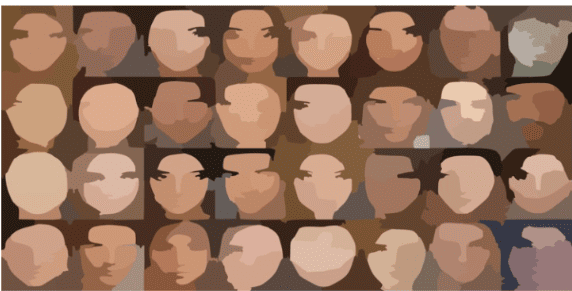
Just yesterday, personal identification was akin to the work of a detective-archivist: piles of yellowed photographs, filing cabinets... Before any technology existed, the only tool for identification was human memory. What is their name? What do they look like? The problem is that "storing" thousands of faces and names in one's head is an impossible task. Information got mixed up, images blurred, and finding the right person was practically unfeasible.
It wasn't just difficult. It was ineffective.
A document exists, but a face does not: the birth of the passport and the first problem

In Russia, the first semblance of a passport appeared during the time of Peter I. His decree of October 30, 1719, marked the beginning of the history of passports in Russian legislation.
Starting in 1721, passports were issued to peasants temporarily leaving their permanent place of residence. However, the nobility, officers, officials, clergy, and honorary city residents did not require any passports for travel within the country.
The Helplessness of the Law: The Pre-Biometrics Era
Until the 20th century, police officers had no reliable way to identify repeat offenders. A criminal could give a new name each time they were detained. Imagine: to find an offender, you had to manually sift through thousands of cards, relying only on vague descriptions of "approximate age and hair color."
The advent of photography in 1839 was a breakthrough, but not a panacea. The images were blurry, the people in them looked remarkably alike, and appearances, alas, have a tendency to change. Browsing through giant photo archives became like looking for a needle in a haystack.
Revolution in the filing cabinet: Bertillon and fingerprinting
Alphonse Bertillon, head of the Paris police, attempted to bring a real system to this chaos. In the 1880s, he proposed the anthropometric method: precise measurements of body parts and the face that do not change in an adult. He also standardized the photographing of criminals — front and profile — which became the gold standard for decades to come.
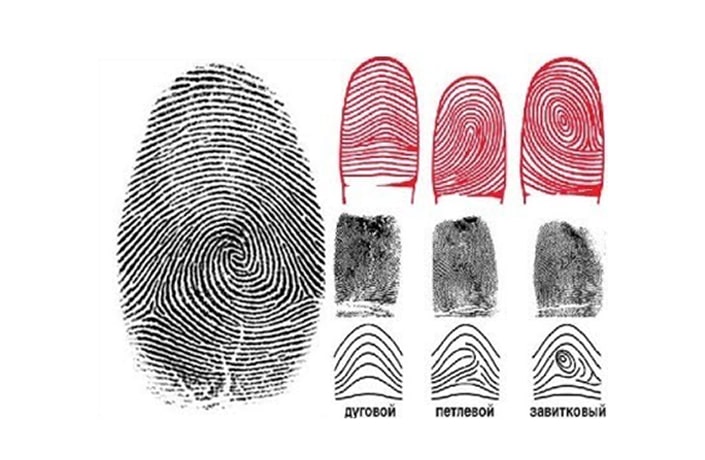
His system was soon superseded by the simpler and more reliable method of fingerprinting, but "Bertillonage" bequeathed to us a key understanding: that identification must be systematic and visual.
In the 20th century, the system for identifying criminals followed an alternative development path: the labor-intensive anthropometric method was replaced by fingerprinting, but the established standard of photographing criminals from the front and in profile remained the foundation of all police photographers' work.
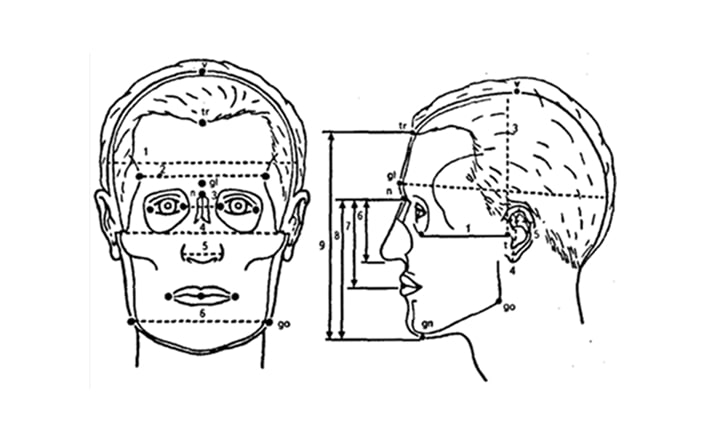
The photography was prescribed to be carried out on the day of the arrest or no later than the following day. Moreover, in addition to the two photographs (profile and front view) required by the Bertillon system, a third photograph was required: "full-length, wearing the same headgear and outer clothing, in short, the same external appearance the criminal had at the moment of arrest."
Revolution in the filing cabinet: Bertillon and fingerprinting
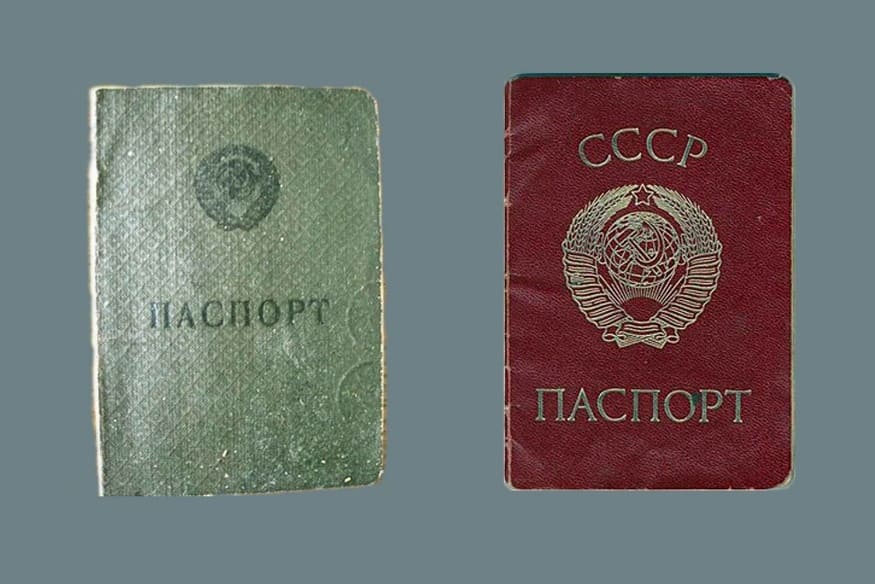
Photography became mandatory in passports in the USSR in October 1937 for better citizen identification. Before this, photos were inserted as needed, but from 1937 onwards, this requirement became mandatory for everyone, and a second copy of the photograph began to be stored in the internal affairs authorities.
A real revolution for the masses was brought by Apple in 2013 with Touch ID technology. It was not just a fingerprint scanner, but a complex system that reads the 3D structure of the skin. We have grown accustomed to trusting biometrics, using it to unlock phones and make payments. Down to a depth of 0.1 mm.
Today, technologies have gone even further. Modern systems use a combination of biometric data (photo + personal information) for lightning-fast identification and authentication of a person.
The power of anonymized data
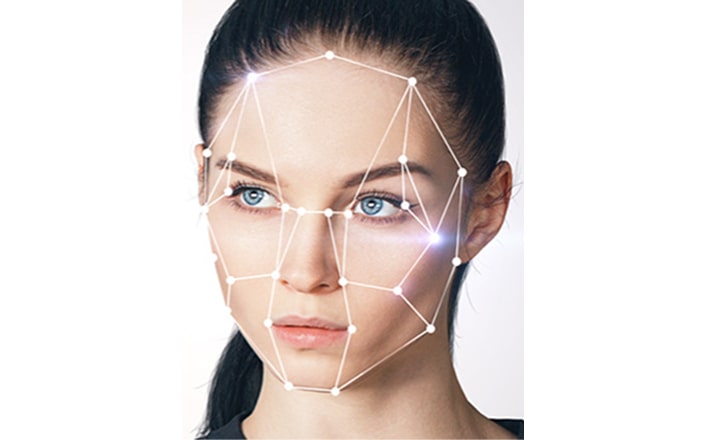
But what if we don't need to know who this person is? What if only their appearance data matters for analytics?
This is where anonymized recognition comes into play. The technology analyzes only the photograph, without linking it to a name, passport, or biography. We don't know who this person is, but we can:
-
analyze visitor flows in shopping centers, train stations, and events
-
enhance security by instantly finding a scene similar to one previously added to the system with a comment about an offense, and more.
This is where anonymized recognition comes into play. The technology analyzes only the photograph, without linking it to a name, passport, or biography. We don't know who this person is, but we can.